

pragmatic play — experternas val av spelleverantör 2026
pragmatic play står i centrum för denna genomgång av casinospel och deras leverantörer. Året 2026 innebär nya möjligheter där pragmatic play bonusar lyfter fram det bästa av vad branschen har att erbjuda.
See also:
- Fördelar och nackdelar med pragmatic play kampanj
- Bonusar och omsättningskrav för spel
- Så maximerar du dina vinster med pragmatic play bonus
- RTP-jämförelse för populära spel hos pragmatic play
- Bilder från pragmatic play spelbibliotek
- Frågor och svar: pragmatic play bonus
- Spelberoende hos pragmatic play: Varningstecken du inte får ignorera
Fördelar och nackdelar med pragmatic play kampanj
Reality checks are the deliberate, often uncomfortable, pauses we take to compare our internal narratives against external facts. They are the cognitive equivalent of looking both ways before crossing a street—a brief, life-saving habit that disrupts the autopilot of assumption. In practice, a reality check might involve asking yourself, ‘What evidence do I actually have for this belief?’ or ‘Is my emotional reaction proportional to the event, or am I projecting past trauma onto the present?’ These checks are not about denying feelings; they are about contextualizing them. For instance, when you feel certain a colleague is angry at you because they didn’t reply to an email, a reality check would involve considering alternative explanations: they might be in meetings, sick, or simply overwhelmed. It means resisting the seductive pull of catastrophic thinking, which often paints worst-case scenarios with broad, vivid strokes. Instead, you gather data—perhaps by asking the colleague directly or by recalling past instances where delayed responses were benign. Reality checks also apply to our self-perceptions. That voice that whispers ‘You’re a fraud’ during a successful presentation can be countered with a checklist of your actual achievements, the preparation you did, and the positive feedback you’ve received. They are not about toxic positivity; they are about accuracy. In relationships, reality checks prevent us from building elaborate castles of resentment on a foundation of misinterpreted text messages or forgotten anniversaries. They require humility, because they force us to admit that our initial gut feeling might be wrong. They also require courage, because sometimes the reality we uncover is genuinely painful—like realizing a friendship has run its course or that a job is not a good fit. But even then, the check serves a purpose: it saves us years of living in a fog of wishful thinking. Over time, practicing reality checks rewires the brain to default toward curiosity rather than judgment. You begin to notice the gap between the story you tell yourself and the observable world, and that gap becomes a space for growth rather than a source of anxiety. For example, a person who fears public speaking might do a reality check before a talk: they review past successful talks, they remind themselves that the audience is rooting for them, and they focus on the message rather than their own nervousness. This is not a superficial pep talk; it is a structured examination of evidence. Similarly, in financial decisions, a reality check might mean looking at your bank account balance before planning a lavish vacation, or comparing the actual cost of a subscription service against how often you use it. It is the antidote to impulse, the brake on the runaway train of desire. In the digital age, reality checks are especially crucial because our feeds are curated to show highlights, not realities. When you scroll through Instagram and feel inadequate, a reality check reminds you that you are comparing your behind-the-scenes to everyone else’s highlight reel. It prompts you to ask, ‘Am I really unhappy with my life, or am I just envious of a filtered image?’ The practice extends to news consumption: before sharing an article that confirms your biases, you check the source, the date, and whether the headline matches the content. In essence, reality checks are a form of self-respect. They say, ‘I value the truth more than I value the comfort of my illusions.’ They are not a one-time event but a continuous discipline, like brushing your teeth or exercising. You might perform mini-checks throughout the day—when you feel a spike of anger, when you are about to procrastinate, when you feel a surge of pride. Each check is a moment of choosing reality over fantasy, clarity over confusion. And while the process can be humbling, it is also liberating, because it frees you from the prison of your own assumptions. You realize that many of your fears were paper tigers, and many of your beliefs were inherited rather than earned. You become a more reliable narrator of your own life, which in turn makes you a better friend, partner, and decision-maker. Ultimately, reality checks are not about being pessimistic or constantly doubting yourself; they are about being awake.
mines casino — spelleverantörer | mines casino
Bonusar och omsättningskrav för spel
- 300% upp till kr2000 och 500 gratissnurr
- kr750 + 25 gratissnurr
- 45x insats inom 7 dagar
- 25x genomspelning inom 14 dagar
Så maximerar du dina vinster med pragmatic play bonus
The decision to buy a feature is rarely a simple one, and it sits at the intersection of product strategy, user value, and engineering cost. When a product manager or a development team evaluates a potential addition to their roadmap, they must weigh the immediate benefits against long-term maintenance, technical debt, and the opportunity cost of not building something else. A feature is not just a set of UI elements or a backend service; it is a promise to the user that their problem will be solved in a specific way, and that promise carries expectations for performance, reliability, and support. Before any code is written, a thorough analysis should be conducted to define the target user persona, the core use case, and the measurable success metrics. For instance, if the feature is a new payment integration, the team must consider not only the development hours but also the compliance requirements, the transaction fees, the failure rates, and the customer support burden that will follow. Similarly, a social sharing button might seem trivial, but it can introduce privacy concerns, third-party script loading issues, and analytics tracking complexities. The buy decision also depends on the maturity of the product: a startup might prioritize speed and iterate on a minimal viable feature, while an established enterprise might demand a more robust, scalable, and secure implementation with extensive documentation and backward compatibility. Furthermore, the team should assess whether the feature aligns with the core value proposition or if it is a distraction that dilutes focus. A feature that is requested by a vocal minority but does not serve the majority of users may still be worth buying if it differentiates the product in a crowded market, but that rationale must be explicit. On the other hand, a feature that is technically risky, such as real-time collaboration or machine learning inference, might require a proof-of-concept phase to de-risk before committing to a full build. The cost of buying a feature is not just the initial development; it includes ongoing testing, bug fixes, updates to keep pace with external dependencies, and potential refactoring when the underlying architecture evolves. In many cases, it is wise to consider purchasing a third-party solution or using an open-source library rather than building from scratch, especially if the feature is not core to the business. However, integrating an external service brings its own set of challenges: vendor lock-in, data sovereignty, latency, and the need to adapt to the vendor’s roadmap. A careful total cost of ownership model should compare the build versus buy options over a three-to-five-year horizon, factoring in not only monetary costs but also the team’s bandwidth and the speed to market. Additionally, the team must think about the user experience holistically; a feature that works in isolation but feels disconnected from the rest of the product will likely be underused. Therefore, the buy decision should be accompanied by a design review, a technical feasibility study, and a stakeholder alignment session. It is also critical to define the definition of done, which includes not just the functional aspects but also the non-functional requirements like accessibility, localization, and performance budgets. For example, if the feature involves loading heavy assets, the team must ensure that it does not degrade the overall page load time, which could hurt SEO and user retention. Moreover, the team should plan for a rollout strategy, perhaps using feature flags to gradually expose the feature to a subset of users and gather feedback before a full launch. This iterative approach allows for course correction and reduces the risk of a catastrophic failure. The buy decision is also influenced by the competitive landscape; if a competitor already has a similar feature, the team might need to match it to stay relevant, but they could also choose to differentiate by focusing on a different aspect. Ultimately, buying a feature is an investment, and like any investment, it requires a clear thesis, a risk assessment, and a post-launch evaluation plan. The team should set up analytics to track adoption, engagement, and error rates, and they should be prepared to iterate based on that data. Sometimes, the best decision is to not buy the feature at all, or to buy a smaller version that can be extended later. In agile environments, the product backlog is constantly reprioritized, and a feature that seems essential today might be deprioritized next quarter due to changing market conditions or user feedback. Therefore, the buy decision should not be a one-time event but a continuous process of reevaluation. The team should also consider the emotional aspect: stakeholders might have a strong attachment to a particular feature, but the data should drive the final call. A transparent decision-making framework, such as a weighted scoring model that includes user value, business value, cost, and risk, can help depersonalize the discussion and lead to a more rational outcome. In conclusion, buying a feature is a strategic act that requires a balance of short-term gains and long-term sustainability, and it should never be taken lightly. A well-bought feature can delight users, increase retention, and drive revenue, while a poorly-bought feature can drain resources, confuse users, and tarnish the brand. The key is to approach it with rigor, empathy, and a willingness to say no when necessary. The team must also remember that a feature is not a static artifact; it will evolve, and the initial buy is just the beginning of a lifecycle that includes maintenance, enhancement, and eventual retirement. Therefore, the decision to buy should be made with a forward-looking perspective, considering how the feature will fit into the product’s future architecture and the team’s capacity to support it. In practice, this means that the team should allocate time for refactoring and technical debt reduction as part of the feature’s lifecycle, not as an afterthought. Moreover, the team should document the rationale behind the buy decision, including the alternatives considered, the assumptions made, and the expected outcomes, so that future team members can understand the context and make informed adjustments. This documentation also serves as a reference for post-mortems and retrospectives, enabling the team to learn from both successes and failures. In the end, the buy decision is a judgment call, but it is a judgment call that can be informed by data, experience, and a clear understanding of the product’s vision. The next time a feature request comes in, the team should pause, ask the hard questions, and only then make the call. That pause is what separates a thoughtful product organization from a reactive one. It is the difference between building a product that feels cohesive and one that feels like a patchwork of random features.
expekt poker — bankrullehantering | expekt casino
RTP-jämförelse för populära spel hos pragmatic play
| Name | Biggest win | RTP | Year | Provider |
|---|---|---|---|---|
| Dragon’s Hoard | 56,300 | 50 | 2023 | J.S. |
| LuckyFruit | 500x | 95.8% | 2021 | Microgaming |
| Slotvinnare | 56,300 | 200 | 2025 | Spelinspektionen |
| MegaSpinn | 18,900 | 200% | 2023 | Yggdrasil |
| TurboCasino | 215,000 | 150% | 2024 | Spelinspektionen |
| DragonBlaze | 215,000 | 300 | 2025 | Hacksaw Gaming |
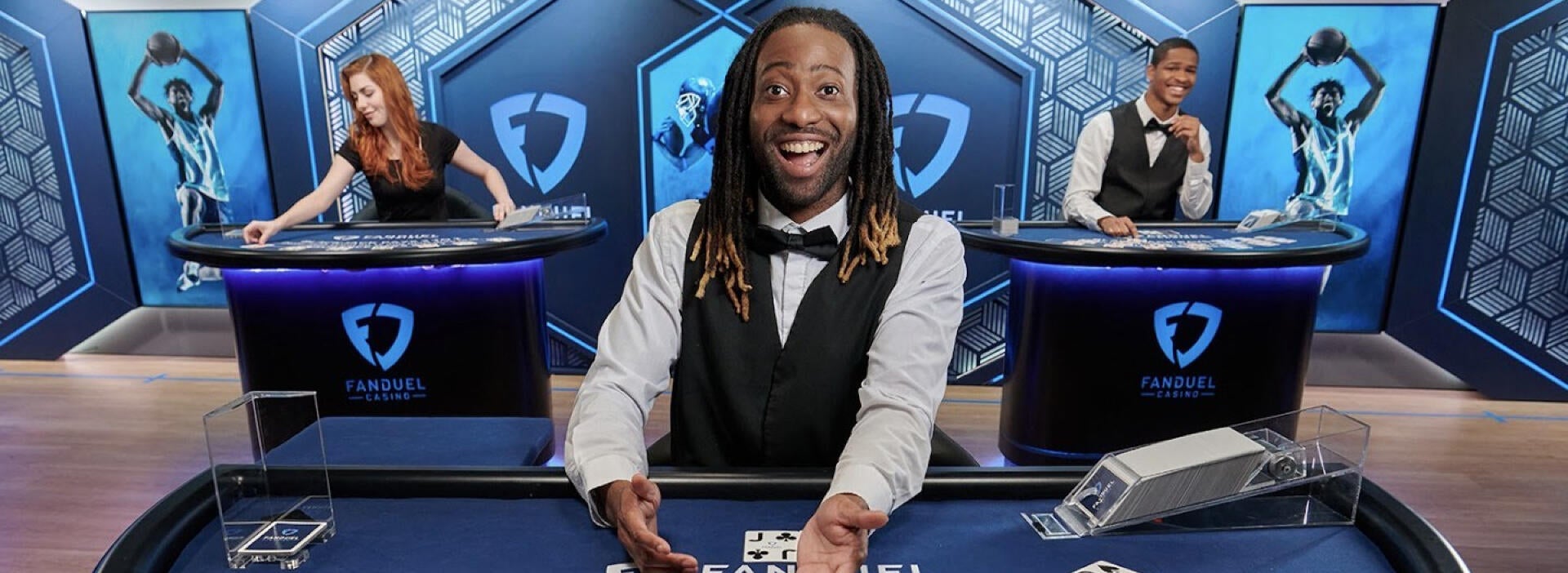
Bilder från pragmatic play spelbibliotek
Frågor och svar: pragmatic play bonus
Vilka spelutvecklare ingår i pragmatic plays spelutbud?
pragmatic play samarbetar med ett brett urval av ledande spelutvecklare, inklusive välkända slotstudior, live casino-leverantörer och plattformsleverantörer. Du hittar spel från flera av branschens största namn, vilket ger ett varierat utbud av slots, bordsspel och live casino-upplevelser.
Kan jag spela demospel från utvalda leverantörer utan att registrera mig?
Ja, hos pragmatic play erbjuds demoversioner av många spel från våra spelutvecklare, så att du kan testa dem utan att satsa riktiga pengar. Detta är ett utmärkt sätt att bekanta dig med spelens funktioner och teman innan du spelar för riktiga pengar.
Hur vet jag att spelen hos pragmatic play är rättvisa och pålitliga?
Spelen hos pragmatic play levereras av licensierade och granskade spelutvecklare som använder certifierade slumptalsgeneratorer. Dessutom är pragmatic play licensierat och reglerat, vilket säkerställer att alla spel uppfyller strikta krav på rättvisa och säkerhet.
casino lightning roulette — topputrustning | casino lightning roulette
Erbjuder pragmatic play spel från specifika live casino-leverantörer?
Ja, pragmatic play har ett urval av live casino-spel från flera kända leverantörer, med bord som blackjack, roulette och baccarat. Du kan njuta av en autentisk casinoupplevelse med professionella dealers direkt från din enhet.
Finns det några krav på minsta insättning för att spela spel från vissa leverantörer?
Nej, minsta insättning (kr25) gäller generellt för alla spel hos pragmatic play, oavsett leverantör. Du kan dock behöva uppfylla specifika bonusvillkor, som 25x genomspelning inom 21 dagar, för att använda bonusar på spel från vissa utvalda leverantörer.
Att undvika vanliga misstag med pragmatic play är nyckeln till en bra upplevelse.
Spelberoende hos pragmatic play: Varningstecken du inte får ignorera
Spela ansvarsfullt – pragmatic play vill att spel förblir en underhållande aktivitet. Spel är endast tillåtet för personer över 18 år. Verksamheten regleras av Spelinspektionen, och för dig som känner att spelandet blir problematiskt finns det stöd att få via Spelpaus.se, Sveriges nationella självavstängningsregister, samt Stodlinjen på 020-81 91 00. Sätt alltid upp insättnings- och tidsgränser innan du börjar spela, och se spelet som en form av underhållning – aldrig som ett sätt att vinna tillbaka förlorade pengar. Om du behöver hjälp, tveka inte att kontakta stödlinjerna.
